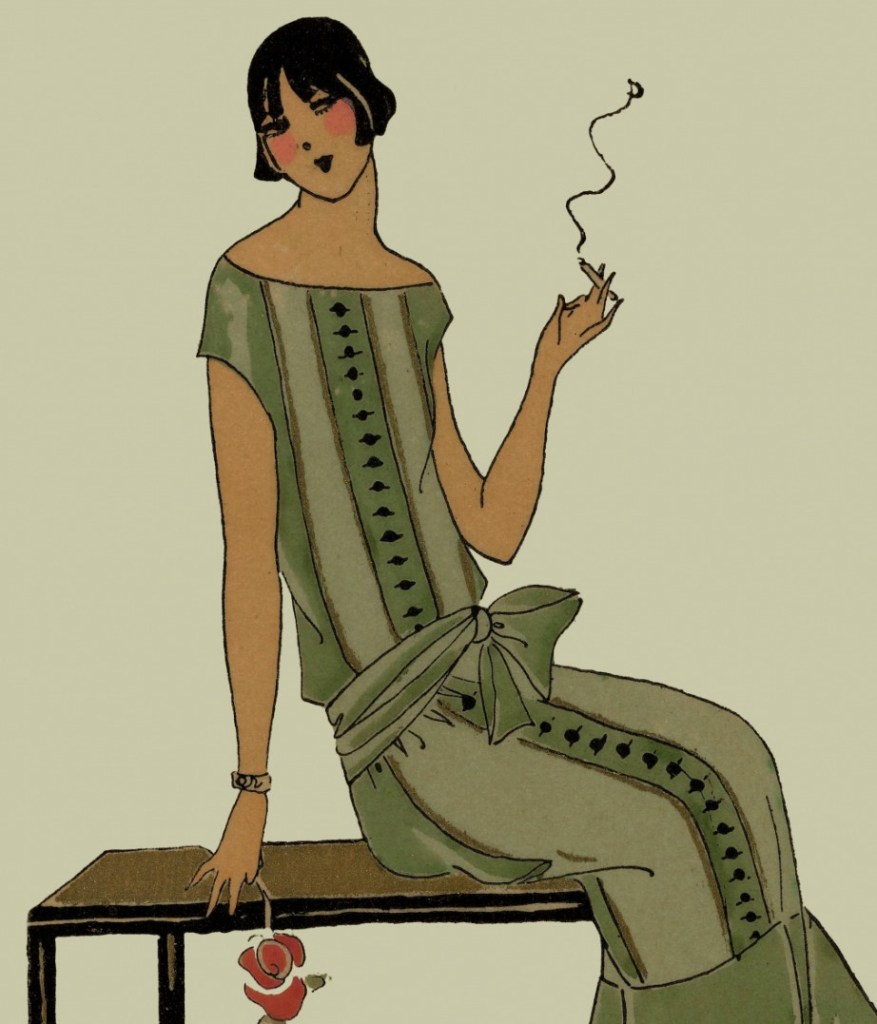
“A man without ethics is a wild beast loosed upon this world.” – Albert Camus
Casey Gilfillan
Who determines goodness in a world where the United States’ president dictates biological law? Just as there is no objectivity to the vapid assertion of an ignorant fascist, there lies no actual value of truth in state-promoted morality. All moral philosophy is characterized by subjectivity, for there is no tangible standard upon which we may call “good” and “bad.” This is why a Utilitarian, Deontologist, and an Ascetic would arrive at different assessments for the moral and immoral resolution of the same conflict. Despite the lack of existence of a true Moral Law, we are reared to believe in such an institution, and then policed into submission to an ambiguous, seemingly unattainable behavioral standard for the remainder of our lives.
As an American woman, I have observed the conflation of Moral Law and Gender Performance throughout my lifetime. Upon examination, one can easily see that many of the prerequisites of being a Moral Woman align conveniently with traditional concepts of femininity. This is an intentional function of patriarchal design. Considering the recent heightened legislative armament against gender expression, as well as the codification of the Fundamendalist’s definition of gender, I decided it might be an opportune moment to explore the viability of the Moral Woman as a livable concept. Who is she, and what defines her moral goodness?
In my research as to the necessary standards by which a woman must behave to be considered moral within the male-centric social context, I have come to the conclusion that it is impossible for women to exist both freely and morally. To live as a free woman would require rejection of the misogynistic moral code, hence rendering the woman immoral by patriarchal assessment. To live as a moral woman with such a context contradicts a woman’s right to an autonomous existence and the pursuit of happiness, hence rendering paradox upon her very existence and therefore refuting the viability of authentic personhood through criminalization of her individuality. Due to the suppressive and paradoxical nature of patriarchal morality upon the female experience… I am calling for all girls to be bad!
THE PEACEKEEPERS OF PATRIARCHAL MORALITY
In order to conduct an accurate evaluation of the viability of the Moral Woman, I first have to establish the conditions of morality in which she exists. The stipulations of the ethical code and nature of the moral authority play an indubitable influence on the autonomy of any individual’s experience. In contemporary societies around the world and here in the United States, moralities have been crafted in a way that place a disproportionate burden, and intentional constriction, on the autonomy of womanhood. In the US, these moral standards stem from religious origin, and were permitted to flourish as the social authority within the framework of a secular society due to the obvious benefit for the ruling white male class. The presence and continued influence of religion, specifically Christianity, within American Morality, supported by exclusionary language and the segregation of gender into acceptable roles, have all contributed to ensuring a morally-hostile environment for women.
While founded as a nation without a specific religious affiliation, it would be wrong to deny the strong and historical presence of Christianity within the US. Even with the alleged separation of church and state, Christianity has always served as a stronghold of influence; it has been the most practiced religion in the country since conception, and per the Pew Research Center as recently as February, still is at 63%. On account of the American context and my personal upbringing within Catholicism, I will be focusing on Christianity for the purpose of this discussion. However, I think it is worth noting that the other Abrahamic religions share the characteristics for which I will criticize Christianity and its influence on societal morality, and deserve the same critical lens upon their respective oppression of women.
Regardless of how closely you follow or how vehemently you reject Christianity, if you live in the United States, you are familiar with the basic principles and images of the religion. You need not be a devout disciple to know that the religion is male-centric, with Jesus, God, and the Masculine Holy Spirit at the forefront. You need not be devout to know that the most notable female figures are known for forced martyrdom (Mary) or moral failings (Eve), as they are still a frequent cultural reference and common punchline. You need not be devout to know that women of the church are not permitted to hold the power that their male counterparts are, for God is alleged to have said, “Let the woman learn in silence with all subjection. But I suffer not a woman to teach, nor to usurp authority over the man, but to be in silence.” (King James Version, 1 Timothy 2:11-12).
These attitudes, traditions, and stories are so well known throughout our contemporary society, and it is because Christian philosophy has subliminally conflated itself with the American psyche, and in effect transposed its system of beliefs into perpetuity. And so we have all spent a lifetime hearing about the bumbling fool that was Eve, who doomed humanity out of paradise and all of womankind into excruciating pain upon childbirth, and of the martyr Mary, the pure virgin who birthed the child of God and embodies the ideal female qualities, purity and motherhood. The other images of women in the Bible are those of submissive, subservient housewives, deceptive villains, home-wrecking temptresses, or servants/slaves that are offered up for rape, abuse, and murder. Among these depictions of women, there lies one commonality; the women who submit to their prescribed nature of submission are lauded, while those who act with any level of autonomy, choice, or agency, are labeled sinners and punished handsomely. These derogatory, oppressive messages are what Christianity communicates to society about women, and transfers into our moral evaluation of women, a gender to whom we have been predisposed to be doubtful, hateful, and skeptical towards.
Regardless of your personal relationship with Christianity, blasting the same stories and parables exposes us all to some degree of indoctrination. In her book, When God Was A Woman, Merlin Stone explores the matriarchal origins of religion and the violent shift to monotheistic, male-centric faith. In this conversation, she discusses the significance of faith-based myths and their long-lasting social implications:
“Myths present ideas that guide perception, conditioning us to think and even perceive in a particular way, especially when we are young and impressionable. Often they portray the actions of people who are rewarded or punished for their behavior, and we are encouraged to view these examples to emulate or avoid. So many of the stories told to us from the time we are just old enough to understand deeply affect our attitudes and comprehension of the world around us and ourselves. Our ethics, morals, conduct, values, sense of duty and even sense of humor are often developed from simple childhood parables and fables. From them we learn what is socially acceptable in the society from which they come. They define good and bad, right and wrong, what is natural and what is unnatural among the people who hold the myths as meaningful.” (Stone, 4-5)
Exclusionary and derogatory language is used to further support the misogynistic foundation of religious and moral philosophy. The very words by which we speak and refer to one another are tainted with implications of androcentrism and/or negativity towards women. The scientific term for humanity as a species, “homo sapiens,” translates to “knowing or knowledgeable man” in Latin (Stone, 15). Other terms like this similarly cut women out of the picture, or degrade and belittle us through association with anatomy, stereotype, and negative tropes. Historically, many careers have been referred to with the formula of “job descriptive noun”-man, i.e. policeman, mailman, fireman, salesman, congressman, clergyman, craftsman, etc.. These relics of speech call back to antiquated notions of men at work while their title-less wives are consigned to homemaking, and also remind us of the men-first philosophy that was used to construct this country.
In addition to words that exclude women, we are also fraught with words that insult femininity within other insulting contexts. For example, if you are a man who is acting fearful of something unbecoming in traditional masculinity, such as a bug, you might get called a “bitch.” The word bitch refers to female dogs, wolves, and foxes, and has an association with femininity that carries onto humans. When a woman is called a bitch, she is most likely being accused of being belligerent, aggressive, assertive, unfriendly, or some other characteristic that lies outside of her approved traits of timid, quiet, small. When a man is called a bitch, he is being called a woman, which means he is being called weak, incapable, feeble. Other insulting words that have an even more direct tie to femininity – Cunt. Pussy. Twat. These words are hurled as cruel insults but are named directly after the most intimate part of female anatomy, the very means by which life emerges – so we have to assume it, no? There can be no other conclusion to draw but that being a woman, womanhood, woman-ness, possession of vagina and woman essence, are bad. Our language and our society tells us so, nobody wants to be a cunt, or a pussy, definitely not a twat. It’s fine if you have those things, but you definitely don’t want to BE one, that would be so bad! Immoral, one might presuppose. Do not let your woman-ness become you, moral behavior philosophies all but scream at us with such diction.
The contemporary manifestation born of the efforts of an exhausted social hierarchy come in the form of assigned roles, deemed and guided solely by biological gender. These roles apply to all aspects of our lives – for a long time, if we could work, but now merely where, how, and for how much we can work; how we should dress; how we should talk, and when is most appropriate for us to do so; what kind of space we should occupy in a group; what we owe to those around us; how much we are expected to lift; how much time we are expected to invest into our appearance; how much you should eat, how publicly you should enjoy food; and so the list continues endlessly, in a painful toil against the organic inclination of the self, and in pursuit of inauthenticity, a performance of self-mutilation. These assignments are not flexible and do not permit deviation in the form of individual expression; they are quite suffocating in this regard, and more frequently armed against a woman than her male counterpart. Men can be overlooked within certain activities, praised even, for doing that which would get a woman sanctioned and branded with immoral status; men are encouraged to have as many partners as they can deceive into sex, while women should be virgins until their husband finally owns them, and then they can have sex whenever and however he wants. The moral standards for men and women are not the same, and they fulfill their gendered notions of “goodness” quite differently.
It is the stories we hear, the words and way in which we speak, and the traditions that follow that establish the standards of behavior. We did not accept these terms, but have been subjected to these conditions and accepted the normalcy of this authority of faux morality. These institutions – the religious backbone, the common colloquialisms, the societal tropes – serve as peacekeepers of the status-quo and fabricators of an oppressive moral theology…..
 Femme Fatalism
Leave a reply to The Moral Woman Does Not Exist P.II – Femme Fatalism Cancel reply