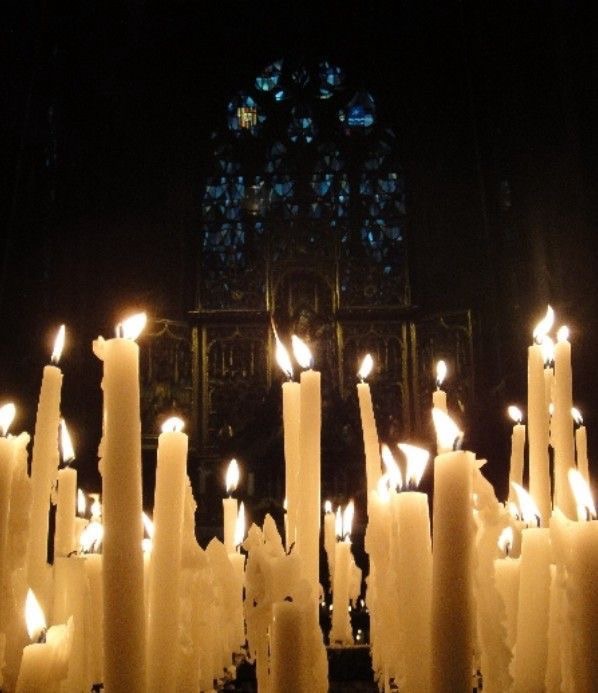
“It’s always the nicest people…” goes that saying that is often unaccompanied by it’s closing predicate, about how the worst and most tragically horrifying events happen to kind people. Cancer, car accidents, gas leaks, severe illness, sudden and early death imposed upon them or their loved ones. It’s always the nicest people…we say collectively as we shake our heads and avert our eyes out of respect for the seemingly discriminate belligerence of fate. And then we wait a moment and slowly raise our heads and move on, and hope that we displayed enough humility that whatever card-dealing hand is shaping our lifeline shows some restraint on account of our good nature.
I think it is easier for a lot of people to have faith in such an institution, one that has the capacity to characterize the trajectory of your life (i.e. God, the general mysticism of the universe, etc.) than it is for them to accept the indiscriminately cruel and unknowable nature of existence. You might find peace of mind hoping and praying for something to spare you and your family from a horrific fate, and further contribute to this effort by living a ‘good’ life of being kind and of service to others. But unfortunately, you know what they say about nice people. The nicest of them all meet the worst of fates. This in itself does not disprove the existence of God or universal mechanisms, but does posit that the forces that may be do not hold regard for good behavior or hope. Perhaps, in taking a logically-clad step further, I might suggest that these forces find some twisted, ironic sense of humor in bringing severe pain upon those who endeavor in the behaviors of being good and hopeful. Should they exist, these forces seem more inclined to displays of awe-inspiring power than they do to nurturing the human spirit, as we have been taught to believe.
As the acknowledgement of the indiscriminate nature of tragedy does not disprove God’s existence, I would like to further discuss this in conjunction with our understanding of the God’s nature. Deity-apologists will hit you with the classic defense, that one phrase they think cannot be hole-punched or doubted or even questioned because it is so secure. The Lord works in mysterious ways, they will regurgitate this platitude that has no biblical origin, though they can be backed up with a little help from the good book: “O the depth of the riches both of the wisdom and knowledge of God! How unsearchable are his judgements, and his ways past finding out!” (King James Version, Romans 11:33). These unthinkable things that happen, events characterized by nothing but blind and unyielding malice, are truly beyond comprehension. Why some would brutalize and violate others, why some face lethal betrayal by their own body during youth, why some are snuffed out in isolation and fear and pain, why some are launched from one pitfall to another; these phenomena extend beyond our ability to reason, rectify, cope. There is too much bad happening seemingly without moral justification, so we accept this notion that it must be unfathomable, something we are not able to understand, due to the Lord and his mysterious ways and all, or the universe and its fancy mechanisms. To think like this demands a dissonance of the cognitive state, because surely these events, these horrific cruelties, are much worse if they are by Design, as opposed to the indifference of existence. To be honest, I don’t think I want whatever intellectual capacity I need to be able to reason through the logic of tragedy.
My question is this: why is it easier to accept that the ineffable ways of God will often present as unduly sinister, highly unethical, and outright wicked, than it is to accept that the nature of existing is unfair and will sometimes encompass those attributes? Why is it more appealing to think that something is subjecting you – or those you know and love – to suffering, when it could be the case that we are all predisposed just the same?
I’m not interested in the crutches or comforts of religion, which I anticipate to be the basis of most responses to the “why” question presented in the paragraph above. I don’t believe that religion should be comforting, nor should universal karmic balance or any of that other stuff, because statistically speaking, if these institutions do hold sway over the course of events, they do not care. They do not care if you are good or if you are bad. I know bad people who have gone unpunished, so to speak, and are able to continue doing evil things to others with impunity. I know good people who have been severely overwhelmed with tragedy, buried by an onslaught of calamity; a phenomenon that cannot be reasoned through.
If you disagree with this assessment or just think I’m flat-out wrong, the following will be a short detailing of some awful things I’ve read about recently that serve as testament to the incomprehensible and indifferent nature of tragedy, uncorrelated to goodness and innocence:
- The 58 year-old man and his 28 year-old daughter found dead in Maine just a few weeks ago, after an attempt to hike on Mount Katahdin.
- Adriana Smith (30), the woman from Georgia whose body was kept pumping on machines for the cultivation and harvest of her fetus by order of the State, even though she had been brain dead since the 9 week (2 month) mark of her pregnancy.
- Sloan Mattingly, the 7 year-old who died while on vacation with her family in Florida. Her and her 9 year-old brother were digging on the beach and a sand hole collapsed, causing them both to fall in.
- Happy Cat Sanctuary in Long Island, New York, which burnt to the ground in a “suspicious fire” in April of this year. The fire claimed the owner’s, Chris Arsenault (65), life as well as the lives of over 100 feline residents. Arsenault opened the facility nearly 20 years ago after losing his 24 year-old son in a motorcycle accident.
- Joshlin Smith, the 6 year-old from South Africa who was sold by her mother to a traditional healer in February of 2024. Witness accounts have alleged that the child was coveted for her “eyes and skin.” The child has been missing for over a year, and was allegedly sold for less than $1,000 (put into USD for purposes of this article).
- Dr. Alaa al-Najjar of Gaza, whose home was hit by an Israeli airstrike. She lost nine of her ten children in one fell swoop, in one heinous act of war and absolute barbarity. Her oldest child was 12. Her only surviving child is her 11 year-old son, who was severely injured; a British surgeon working in the hospital commented that the boy’s “left arm was just about hanging off, he was covered in fragment injuries and he had several substantial lacerations…as we lifted him onto the operating table, he felt much younger than 11” (BBC).
Regardless of any argued avoidability of fate, hindsight is 20/20, and for all the spiritual dissidents seething while reading this, why would God have planned such a fate for these people? It doesn’t make sense, because there is no sense to be made of it. Why do children and puppies get cancer? Because bad things happen sometimes and your allegiance to superficial notions of goodness will not protect you.
 Femme Fatalism
Leave a comment