By Mat
I have, over the course of the past two weeks, become entirely obsessed with Nosferatu. I have engaged in the yassification of Count Orlok. I have debated whether the rotting flesh or the mustache are deal breakers, and decided neither are. Caught up in the joy of everyone coming out as monster fuckers, I nearly overlooked the deeper, fraught messaging of the movie. Count Orlok may have a full frontal scene, but Ellen and her seizing, orgasmic terror take up far more of the film’s time and attention. While it’s fun to engage in the sexy corpse discourse, to over-sexualize him is to discredit the overwhelming horror and difficulty of Ellen’s task. Count Orlok’s sensuality exists in tandem with Ellen’s suffering, and his own grotesque evil. I believe he is not sexualized in spite of, but because of this complex association between horror and lust.
It is well known that women are not allowed to want to have sex, in media and real life alike. They have to be coy and deceptive and subversive, or else they are hysterical, or whores. Women’s sexuality is forced to simmer under the surface, only revealing itself under duress. This social dynamic has created the increasingly mainstream genre of romance that is monster fucking. This genre of being coerced, or “taken” by some creature that is not a man, but is perhaps more, relinquishes the responsibility of the woman. In this context a woman can have not just sex, but do absolute freak stuff, with some domineering entity without the same social consequence as simply engaging with human men. Any errant desire she might have becomes irrelevant in the face of his power and control. Any critique she might face is easily pushed aside, as the supernatural power and strength of her suitor were simply out of her control. In Nosferatu, the inhuman quality of Count Orlok entraps Ellen, while also allowing her to experience desire, and longing, and sensuality that were not otherwise accessible to her within the bounds of her society. This intensity of pursuit, against her will, absolves her of any pleasure she might receive, as she is not an entirely willing participant. Instead of a whore, she is a martyr.
People can easily sexify the Count because there are overt sexual themes to the film;, they show his dick, he describes himself as an appetite, he says that Ellen’s “passion” is bound to him, and her only sex scene with her husband is in the image of her intimacy with Count Orlok. The fact that he is a literal smelly rotting corpse is secondary to the fact that he desires Ellen intensely. Common in the monster fucking lore is this concept of being fated for another person, providence! To take the guesswork out of love is enduringly desirable, to be ensured by some higher power that you have made the right choice is to be unencumbered. Count Orlok assures Ellen continuously that they are meant to be together because she is not of the human world. This fatedness, this undeniability, leads to an intensity of desire that is, in itself, desirable.
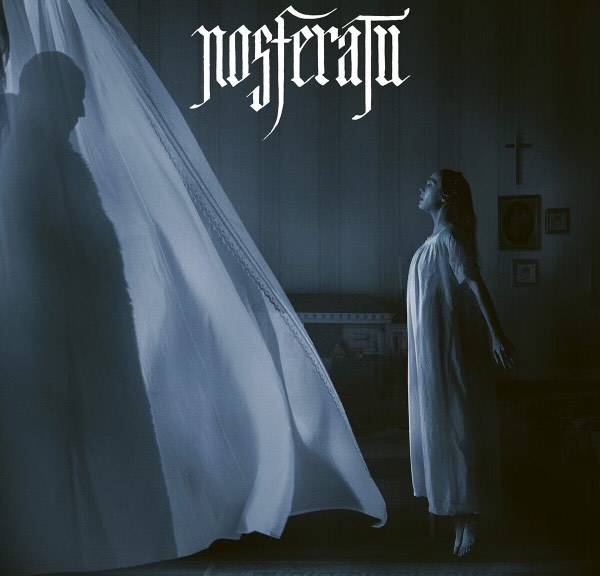
While Thomas, for better or worse, wants to achieve financial and social security for himself and Ellen, Orlok is singularly focused on obtaining her. She is his only objective, and this is a romantic notion!
Nothing is so sensual as being desired, and the gratification is proportional to the desire. The romanticism of giving in to fate, of being held so singularly and intensely is certainly alluring. If we ignore the problematic nature of the ownership that Orlok wishes to have over Ellen, this desire for total ownership only increases the clarity of how strongly Orlok desires her. While other men have desire for wealth and children and property, Orlok does not have to participate in this economy, his sole currency is in her, and her body, and having her.
Regardless of the true desirability of Count Orlok and what he represents, Ellen is faced with a choiceless choice. The monster sex genre is rooted in this sort of consensual non-consent, pushing the boundaries of a “normal” romantic relationship. This is because of the intangibility of consent between a person who desires a beast or a non-human thing that cannot ask for, or give it. Whether Ellen wanted to fuck Orlok or not is irrelevant- she had to do it to save humanity. I think the monster genre is a more “fun” way to approach concepts like this, because of the layering of fate and history and supernatural connected-ness. These ornaments disguise the harshness of the reality. The reality is give yourself to this beast or die, everyone dies.
In getting engrossed in the sexualization and meme-ification of Nosferatu, it is easy to forget the sexually traumatic and intense themes that are at the forefront of this film. For the Count, it would appear that sexuality is a device of appetite as opposed to one of lust-quench, but this is not difficult to understand. It is with regard to us, the viewers and our overwhelmingly laudatory, almost vulgar response to Orlok’s sexual representation that has been quite peculiar, considering the terrifying and monstrous nature he inhabits. However, upon analysis of the vampire’s behavior and predisposition to Ellen, it becomes more clear. It is not the coat or the stache, but the unmitigated, desire that Count Orlok represents that makes him so appealing to the romantically inclined girls, gays, and theys of the internet.
 Femme Fatalism
Leave a comment